Meta Ads · 13 August 2026 · 5 min read · a two-column account check
Link clicks are not landing-page views: measure the gap
On Meta, a link click is a tap, not a visit. Learn where clicks disappear, how to measure arrival rate, and what to optimise for next.

Built Admiral · runs the audits on real accounts

Meta reports a link click as soon as someone taps. It reports a landing-page view only after the destination loads and the tracking event confirms arrival. Put those two columns together before calling a click campaign successful.
If you report on link clicks (or worse, optimise for them) that gap is invisible. Ads Manager will happily show you a healthy CTR and a falling cost per click while many of the people you paid to reach never load the page.
A link click is a tap, not a visit
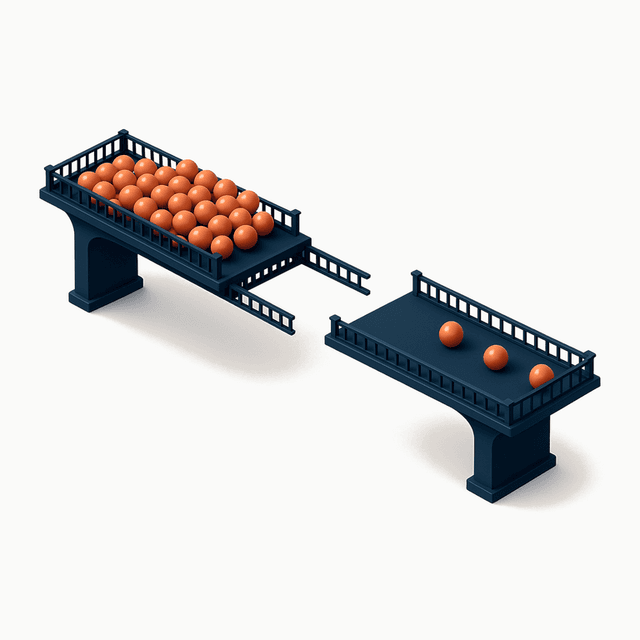
Meta counts a link click the instant someone touches the link. A landing-page view requires the page to actually load with the Meta pixel (or an in-app browser event) confirming arrival. Between those two moments live all the ways a click dies: slow mobile pages, the in-app browser opening and being closed before paint, accidental taps (especially on placements where the tap target is most of the screen) and bots that click but never render.
Some gap is unavoidable. The size and placement breakdown make it useful: a sharp difference between placements can expose accidental taps, a slow page, or traffic that closes the in-app browser early.
Why click optimisation makes it worse
When an ad set optimises for link clicks, Meta’s delivery system hunts for the people and placements most likely to produce them, at the lowest cost. Accidental taps are the cheapest clicks in the auction. So the system drifts, rationally, toward exactly the inventory where clicks are least likely to become visits. You trained it to. The placement breakdown shows whether one source is producing cheap taps without comparable arrivals.
Measure your own gap
Add both columns side by side
Ads Manager → Columns → Customise
Add Link clicks and Landing page views. The ratio is your arrival rate; compare it by placement before changing delivery.
Break it down by placement
Breakdown → By delivery → Placement
If one placement’s arrival rate is dramatically worse, that placement is buying taps, not visitors.
Check what the ad set optimises for
Ad set → Delivery
“Link clicks” means the system is allowed to chase the cheap taps. Landing-page views makes arrival the goal.
0 of 3 checked
The fix ladder
Rung one, free: switch optimisation from link clicks to landing-page views. Meta now only counts (and hunts for) clicks that arrive. Expect the reported click count to fall and the visit count to hold; you were never buying those clicks anyway.
Rung two, the real one: a pixel event on the page that means money (Lead, Schedule,Purchase) and optimisation toward that. Landing-page views still count arrivals, not outcomes. Note the ladder’s order, though: conversion optimisation needs conversions to learn from, so a brand-new account climbs to arrivals first and earns its way to outcomes.
One honest caveat: changing an ad set’s optimisation goal resets its learning phase. Don’t flip it daily; pick the rung your data supports and let it learn.
Sources
- Understand the difference between link clicks and landing page views: Meta Business Help Center
- Best practices for landing page view optimisation: Meta Business Help Center
Admiral compares clicks with confirmed arrivals, identifies the placement behind the gap, and checks the optimisation goal on every connected Meta account. The finding is priced from that account’s own history.
Run the free audit